Our Strengths: What is a Hollow Fiber Membrane?

Target Substances
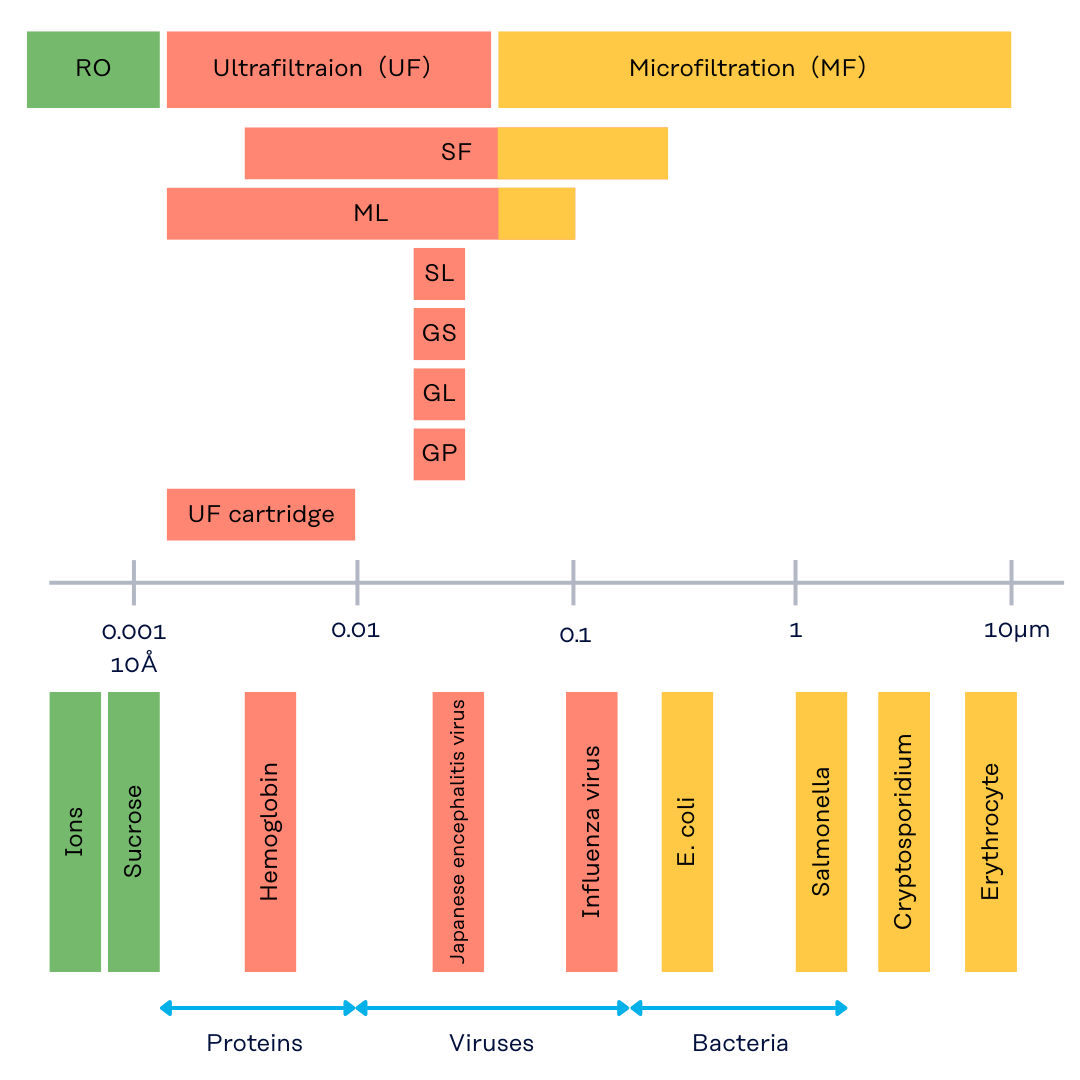
The pore size of the hollow fiber membrane determines what can be separated.
The figure below shows the pore size, the material to be separated, and the range of Kuraray's hollow fiber membrane products.
Features of Hollow Fiber Membrane Modules
Hollow fiber membrane modules are currently the most popular membrane modules for MF and UF membranes, offering the following advantages:
- High filtration accuracy and stable quality filtered water
- Large filtration area per footprint and compact equipment
- Unattended operation is possible through automated operation.

Filtration Methods
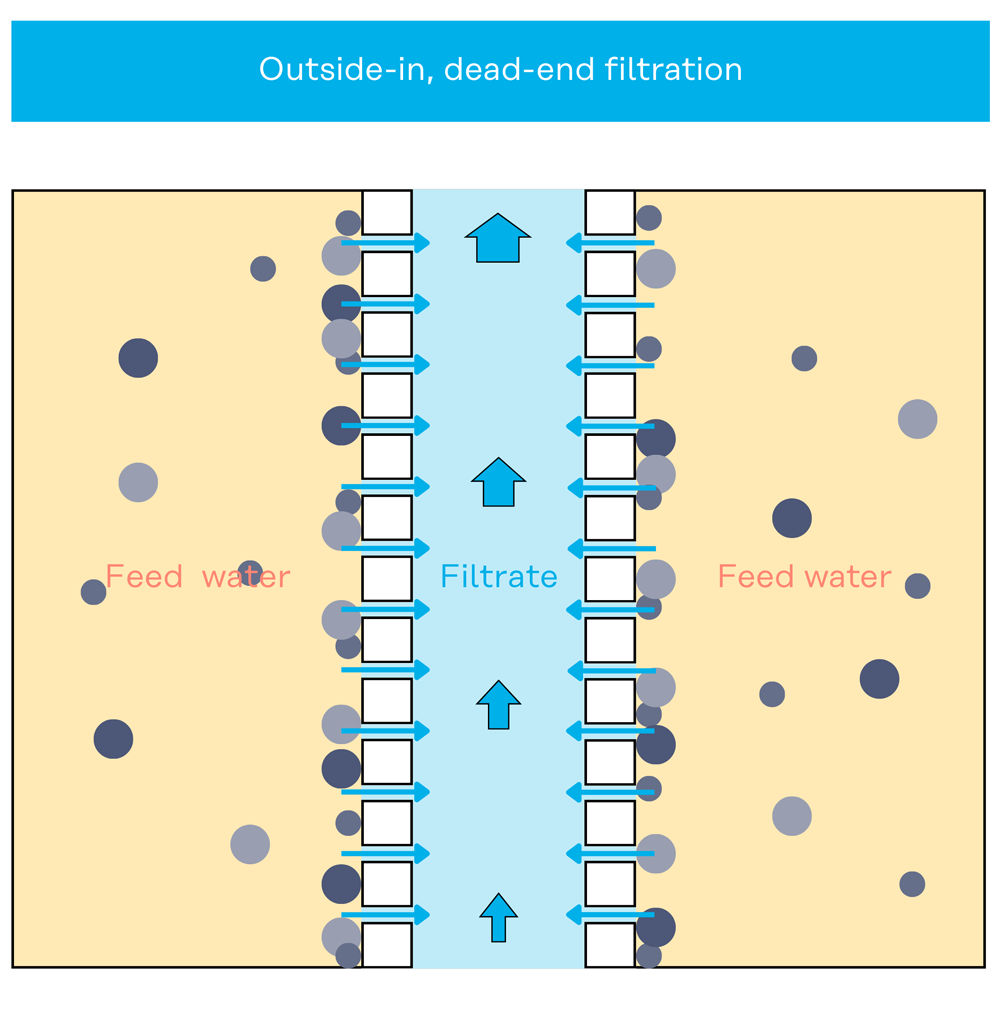
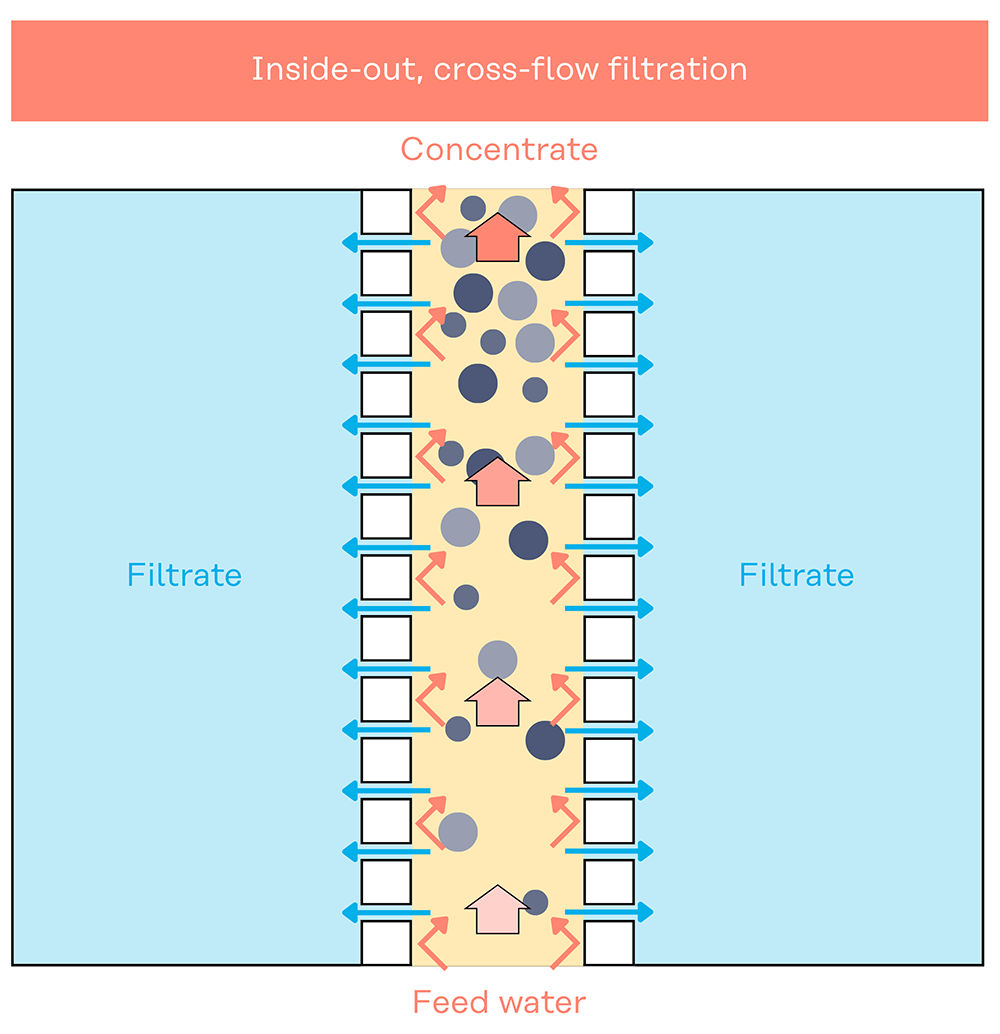
There are two types of filtration methods for hollow fiber membrane products: dead-end filtration and cross flow.
Dead-end filtration mainly uses outside-in filtration, in which raw water is supplied from the outside of the hollow fiber and filtered water is obtained from the inside. The Outside-in, dead-end filtration method has the following advantages and disadvantages.
- Large membrane area for filtration
- Low power consumption
- Unsuitable for water with high suspended solids concentration
Cross-flow filtration mainly use inside-out filtration in which raw water is supplied from the inside of the hollow fiber and filtered water is obtained from the outside. The inside-out, cross-flow filtration has the feature of being applicable to water with high suspended solids concentration by performing filtration while circulating water at a high linear velocity inside the hollow fiber, and has the following advantages and disadvantages.
- Small membrane area for filtration
- High power consumption
- Suitable for water with high suspended solids concentration
It is important to adopt an appropriate filtration method depending on the properties of the feed water and the purpose of filtration.